Retaining Wall Rebuild with Drainage Done Right in Liberty Township
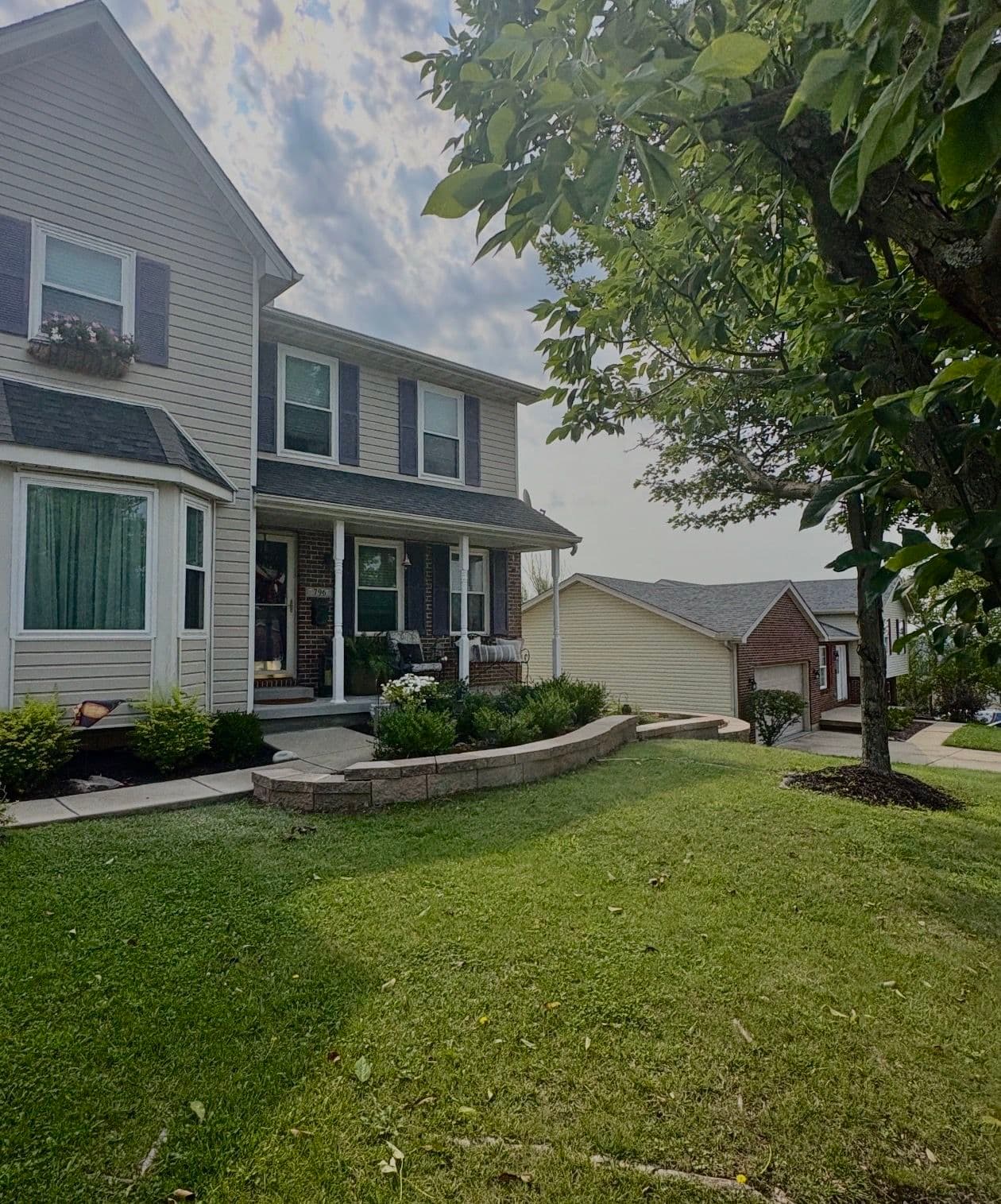
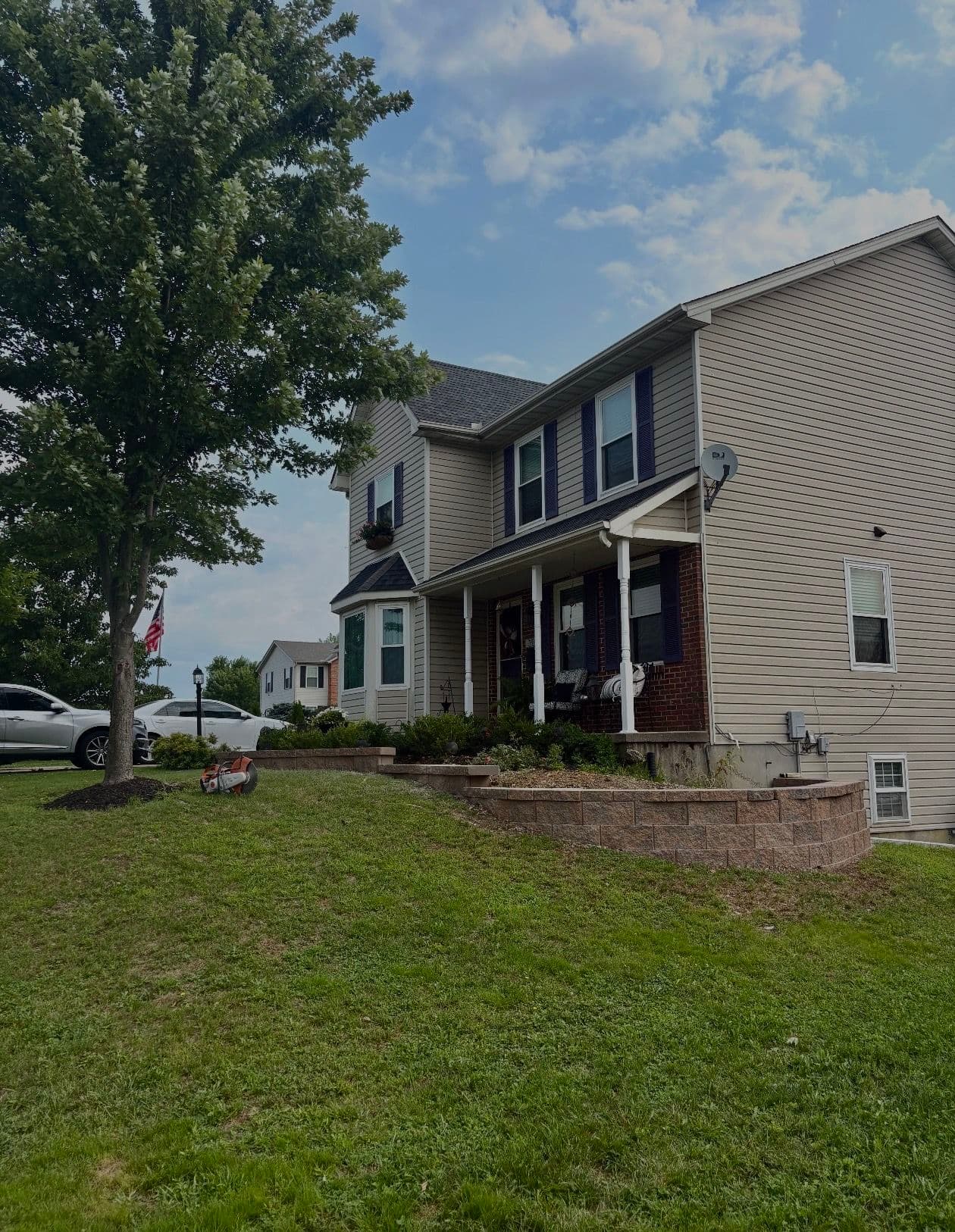
Retaining walls don't fail overnight. It's usually a slow process - a slight lean here, some cracking there, water pooling where it shouldn't. By the time most homeowners decide to do something about it, the wall has already been struggling for a season or two. That's exactly the kind of situation we dealt with on this Liberty Township property.
The original wall wasn't doing its job anymore. Poor drainage was a big part of the problem. Without proper drainage behind a wall, water pressure builds up in the soil and pushes against the structure from the inside out. Over time, that pressure wins. We tore out the old wall and rebuilt it from scratch - this time with the right materials and drainage built into the system, not treated as an afterthought.
The new block wall wraps cleanly around the front landscape bed, holding back the grade while giving the front of the house a sharp, finished look. We also replanted the bed with shrubs and ground cover to stabilize the soil and tie everything together visually. A retaining wall that holds and a landscape bed that looks intentional - that's the goal on every job like this.
What makes a wall last isn't just the block you use. It's the base, the compaction, the drainage layer, and how it's all tied together. Skip any one of those steps and you're back in the same situation a few years down the road. We don't cut corners on the stuff you can't see, because that's exactly what determines how long the wall holds up.
A wall like this - properly built with good drainage - takes weather-related worry off the table. Heavy rain, freeze-thaw cycles, saturated ground - none of that should be a threat to a well-built wall. If your wall is starting to show signs of failure, it's worth addressing it before the problem gets bigger and more expensive to fix.